Essays in White and Shadow
There has always been something magnetic about Zaha Hadid’s work for me. Even before I fully understood the significance of her architecture, I sensed in her projects an encounter between cinema and architecture, a crossing of painting and sculpture, a dialogue between poetics and aesthetics, a paradox between the possible and the impossible.
Later, when I had the opportunity to work in her London studio in 2006, I was exposed to a highly manual method of exploring dynamic, plastic forms through compositions made of cut paper and cardboard—mostly white—where shadow played a fundamental role in modelling space and shaping perception.
Hundreds of these studies, scattered throughout the studio, framed on walls or quietly stored in corners, always fascinated me—perhaps even more than their eventual architectural outcomes or the studio’s built work itself. There was something dizzying in the interplay between solid and void, between the static and the dynamic, between the abstract and the figurative.
During that same period in London, I also discovered the work of Lygia Pape and Rachel Whiteread. The desire to one day continue exploring this magnetic practice—composing volumes painted in white and shaped by shadow—remained with me, quietly, somewhere in the subconscious.
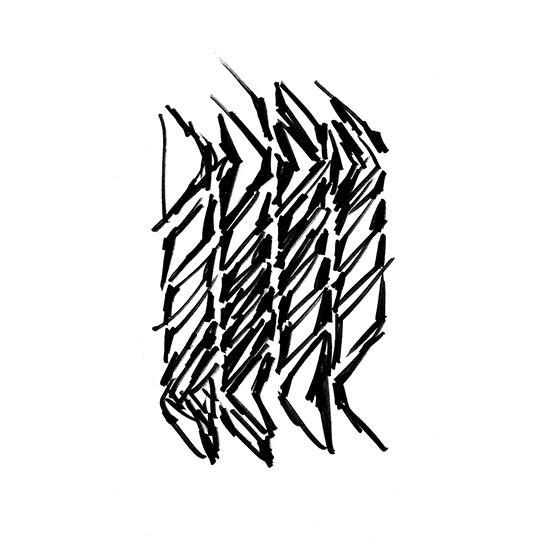
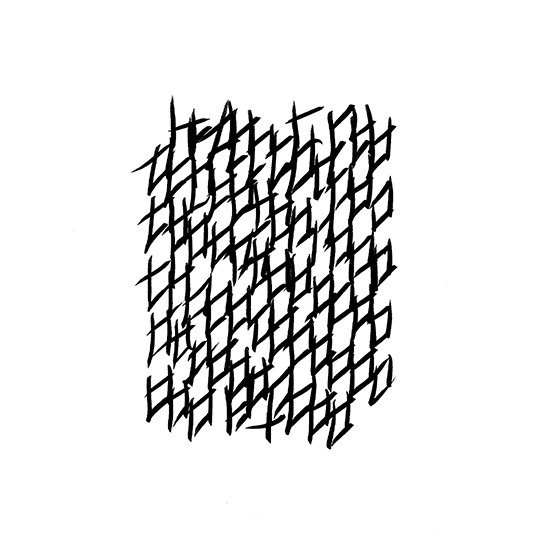
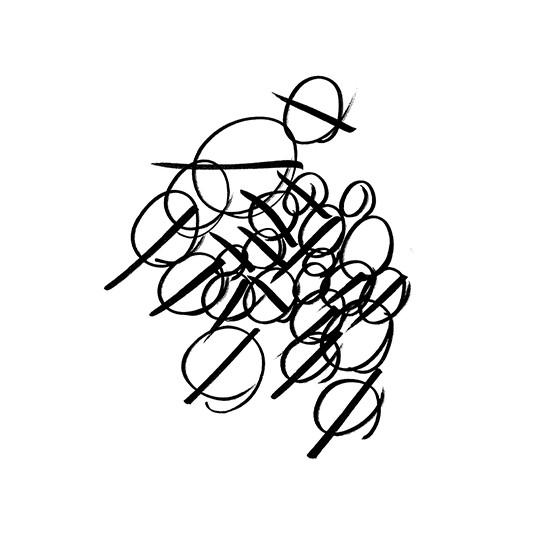
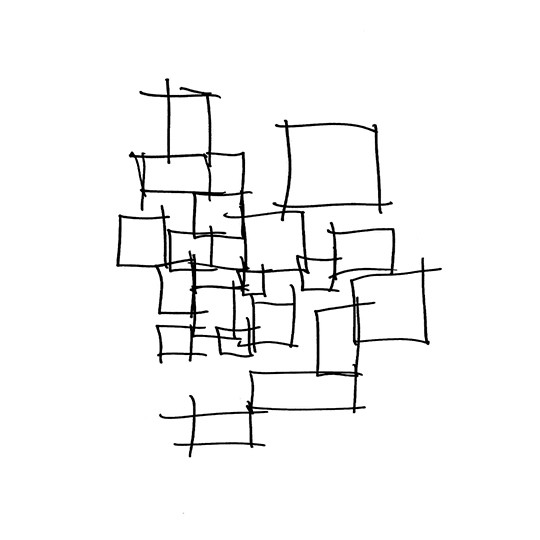
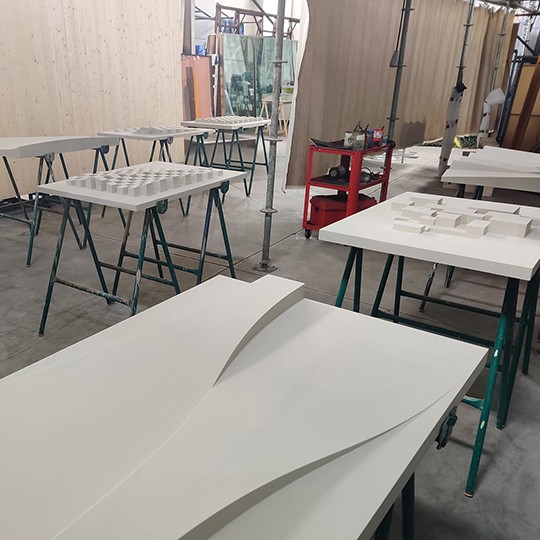
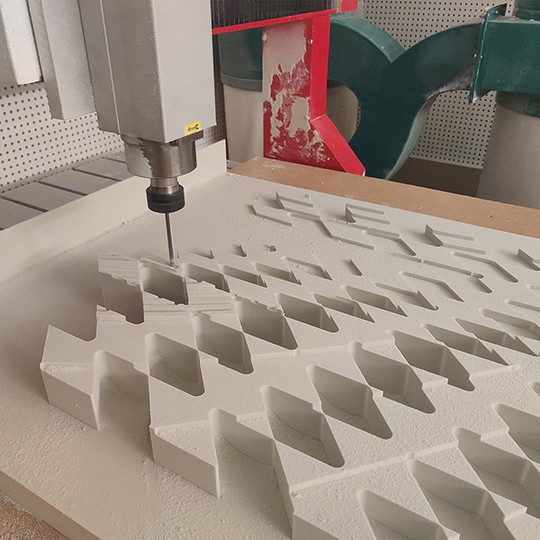
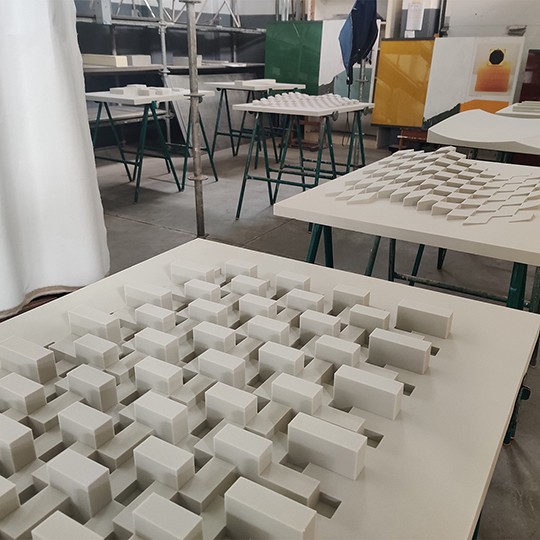
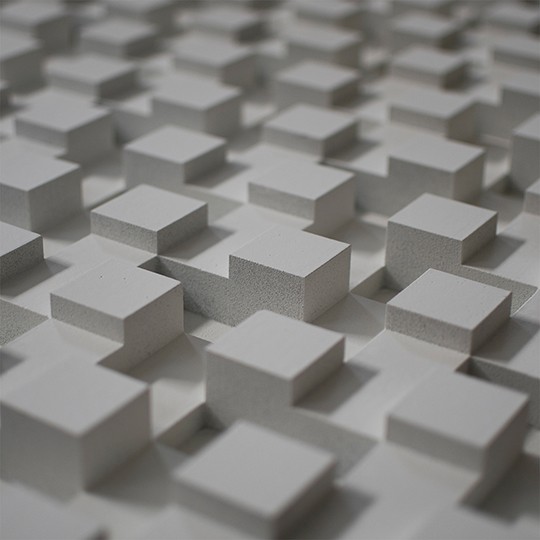
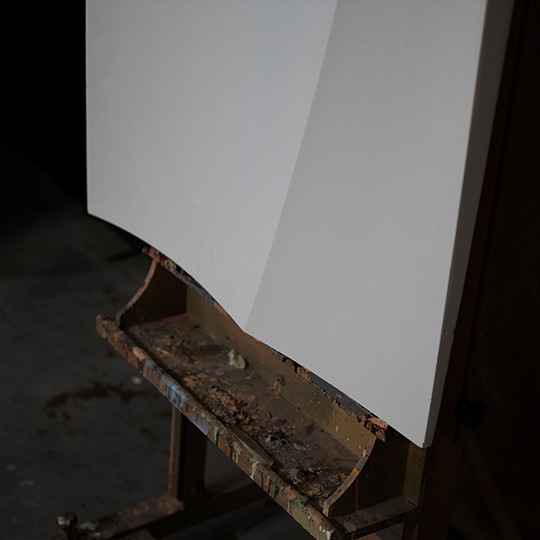
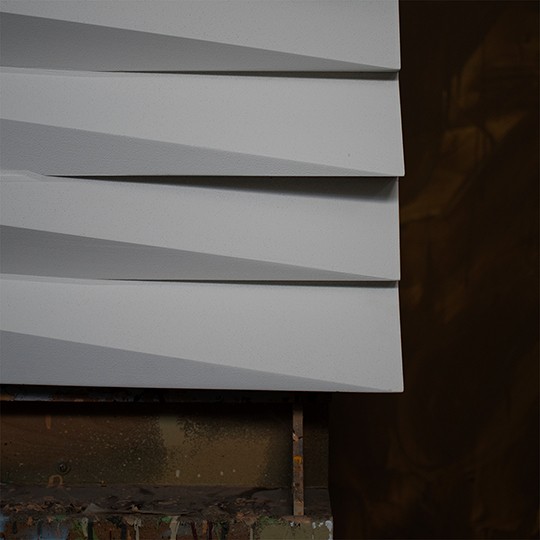
During the first decade of OODA, many ideas were tested and explored across different contexts and frameworks. Some found their way into built work, but many more were left behind, crystallized in a vast sea of conceptualized, suggested, or theorized possibilities. Recently, I became interested in revisiting and recycling part of this intangible heritage, using it as inspiration to be reinterpreted through a process of abstraction and synthesis.
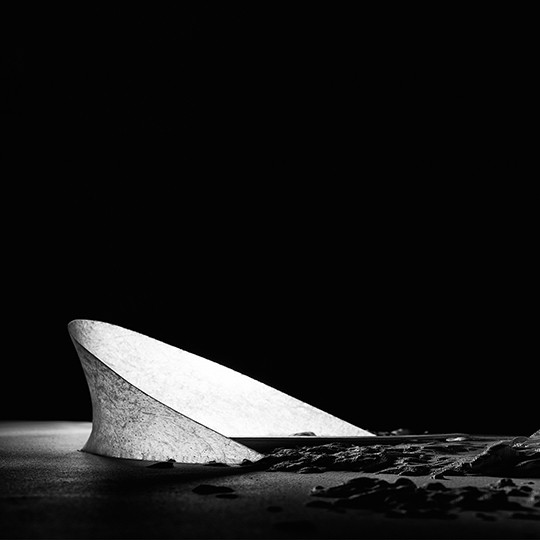
As creative tools, abstraction allows thought to distance itself from the specificity of a given project, amplifying the dialectic between shadow and form, while synthesis emphasizes the ethereal genesis of an idea and the timelessness of its potential. From this process emerged these essays in white and shadow.
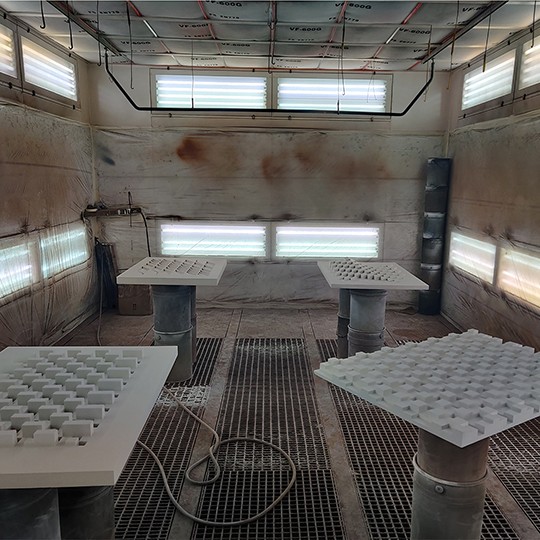
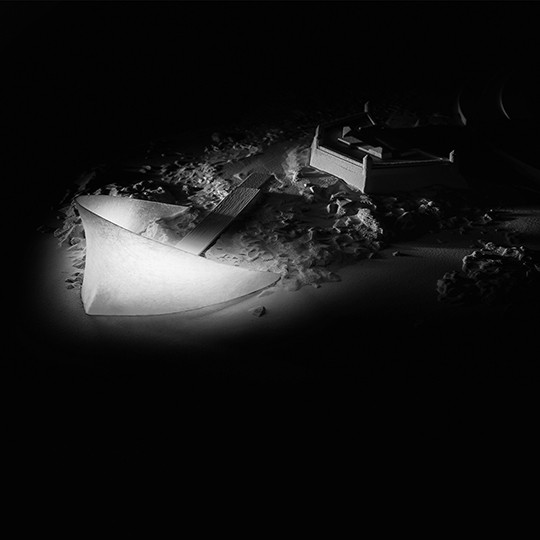
Without pretension or artifice, without plans or higher ambitions, they were gradually produced during the pandemic, also as a way of exploring and questioning the creative relationship between imagination, digital modelling, and three-dimensional formalization through processes more commonly associated with industry—such as 3D printing, painting, and finishing.
Art, like architecture, can be understood as a process of thought and critical reflection that then employs different tools to give form to those ideas. These essays, while seeking to reveal the beauty of shadow as it moves across and inhabits different formal compositions, also reflect on how digital media and new technologies may complement the analogue and tactile practice of visual expression.
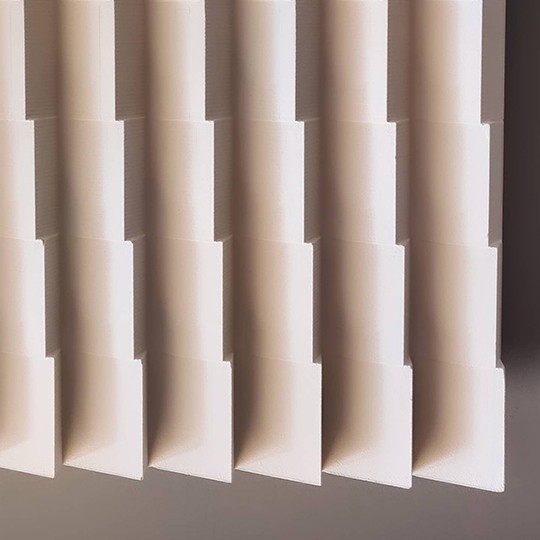
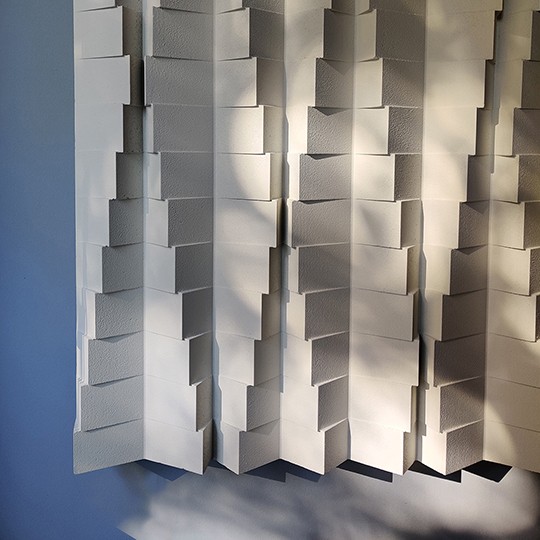
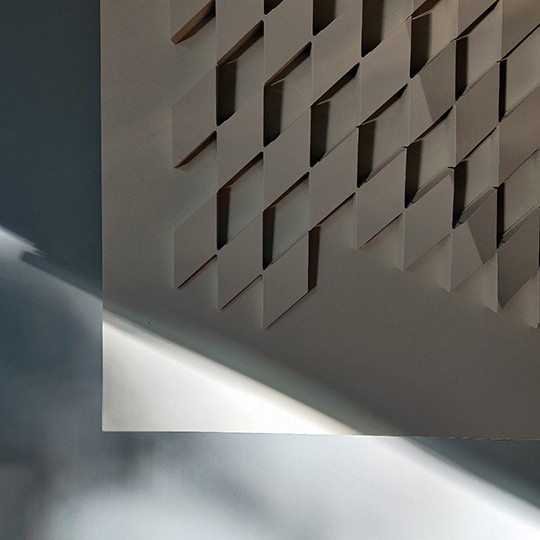
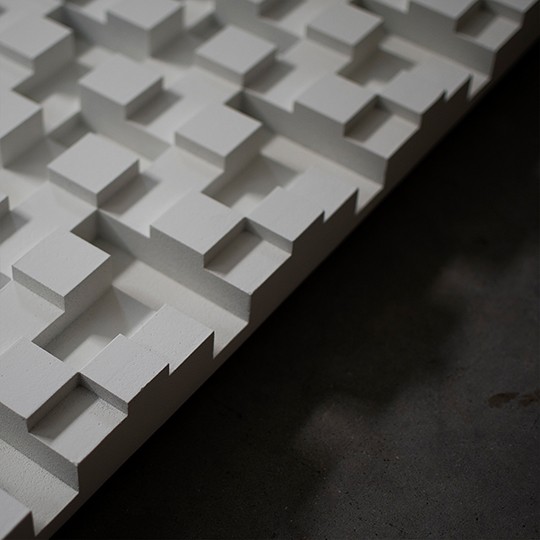
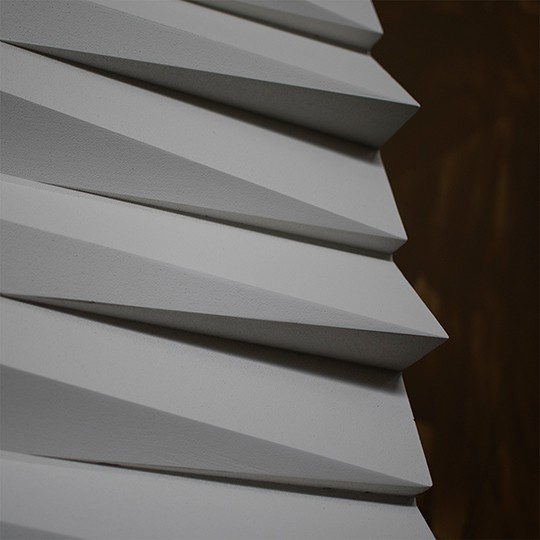
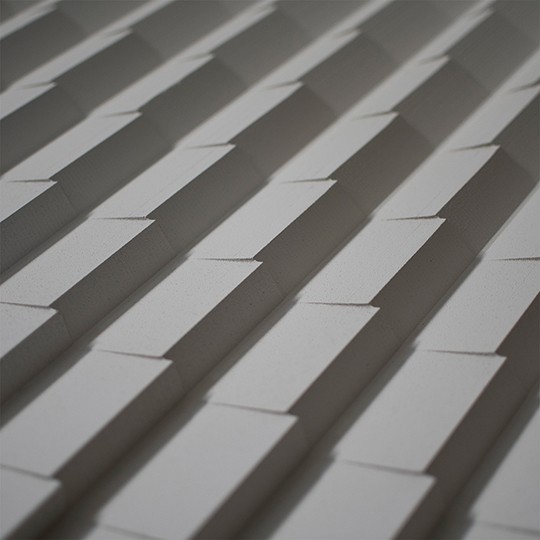
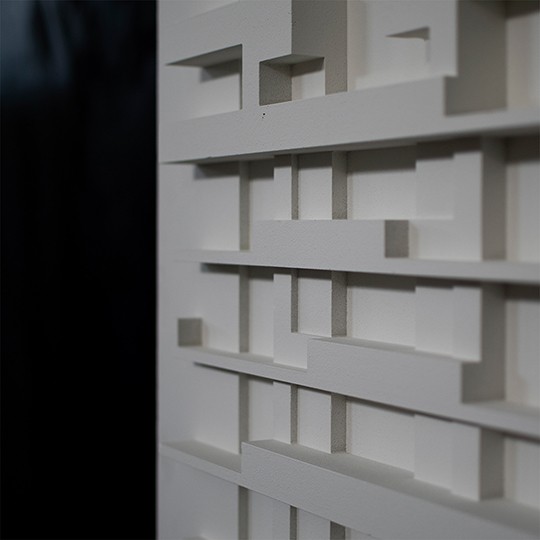
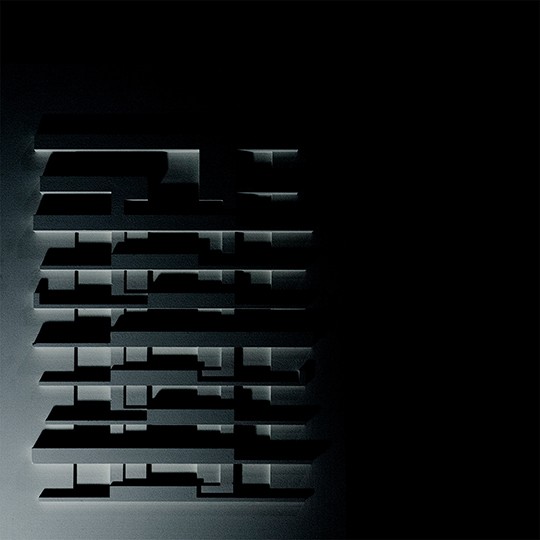
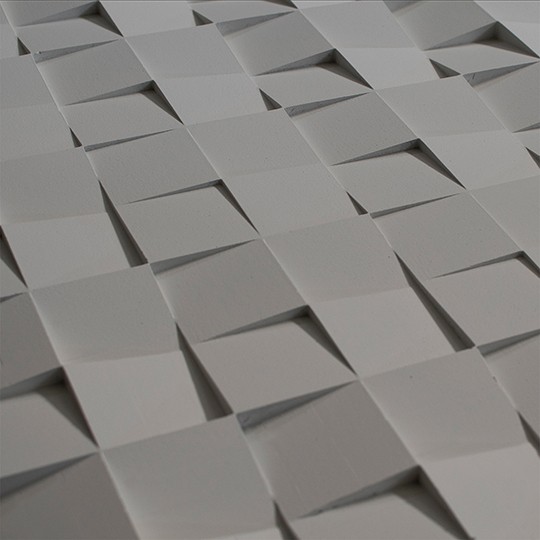
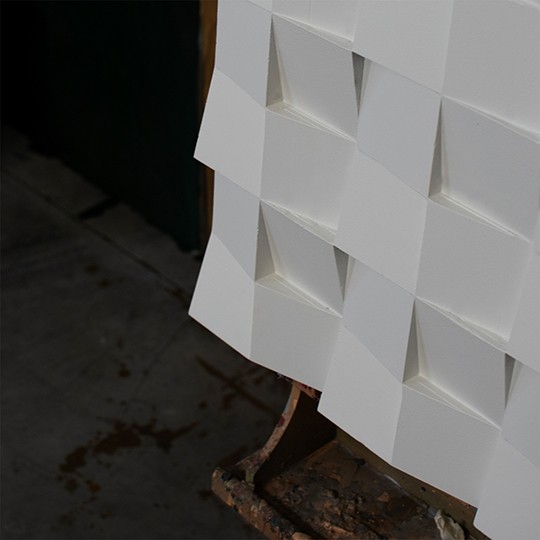
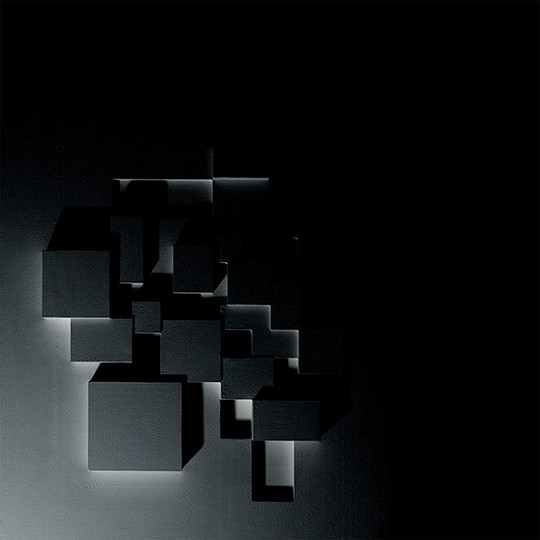
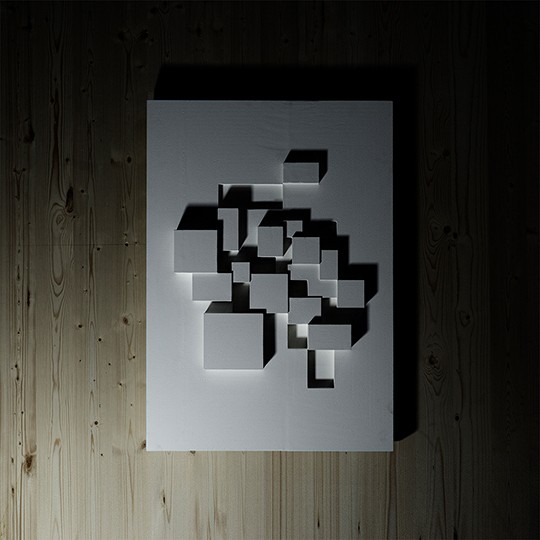
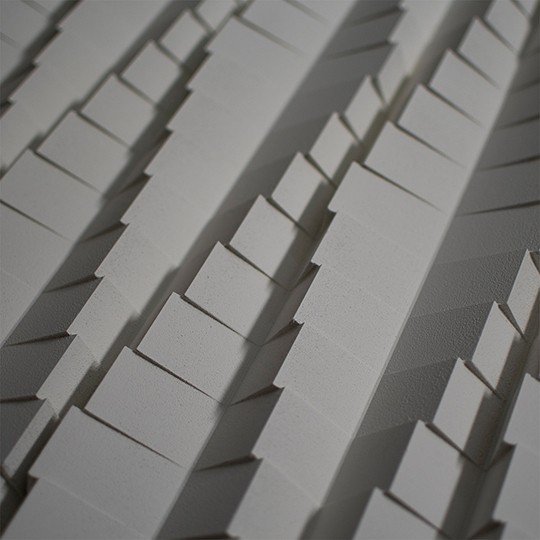
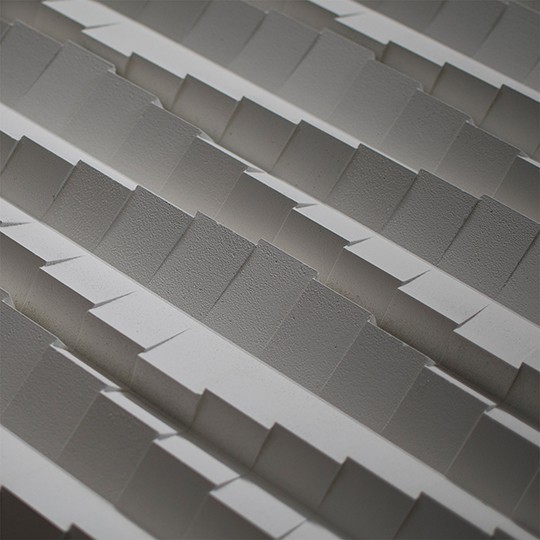
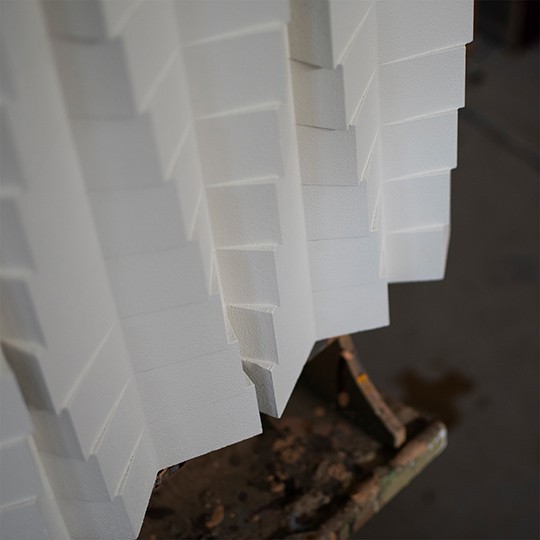
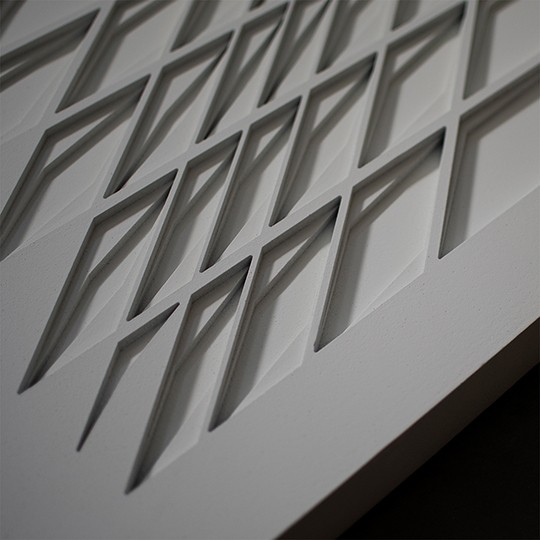
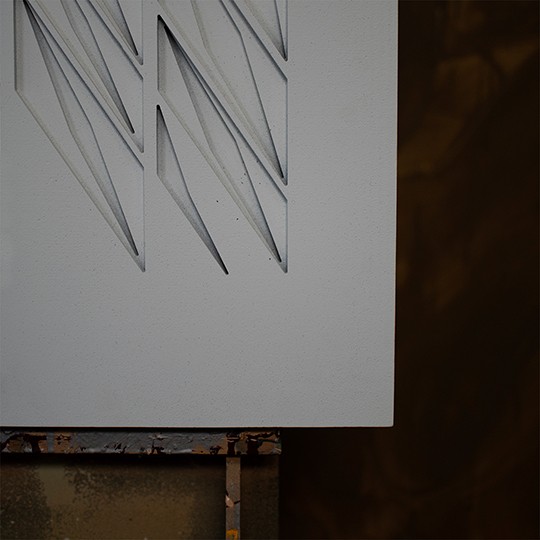
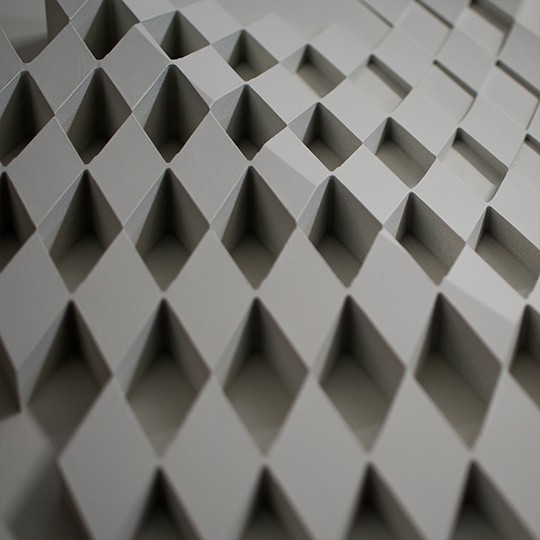
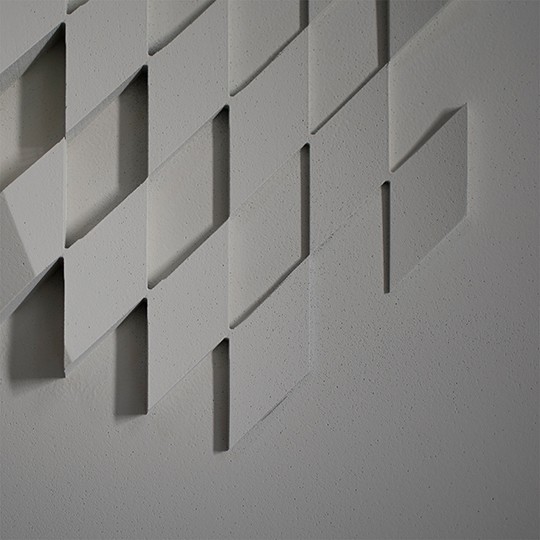
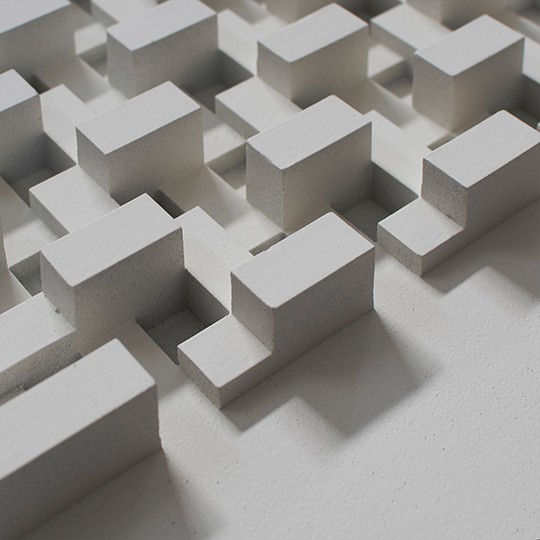
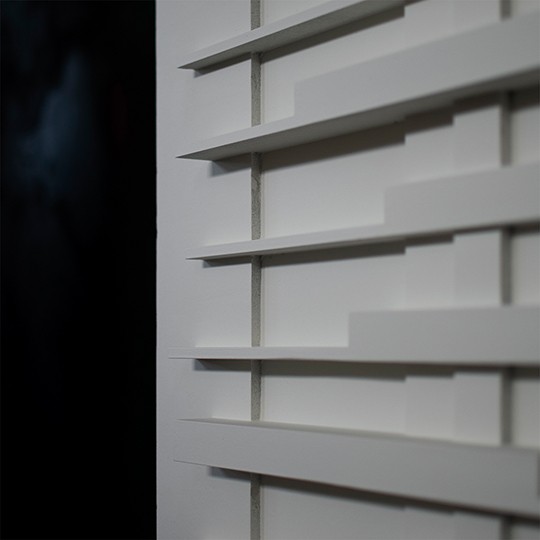
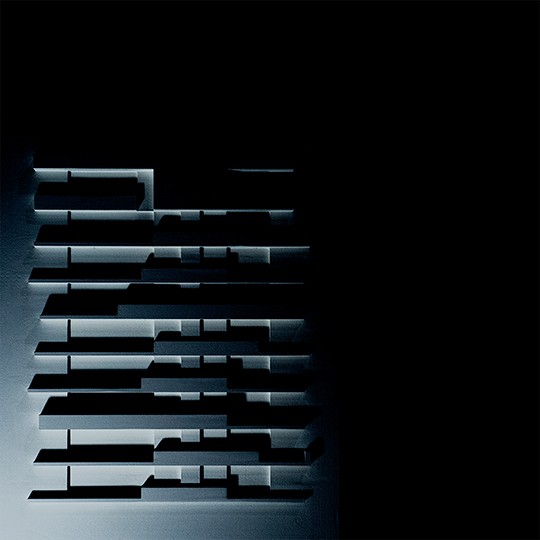
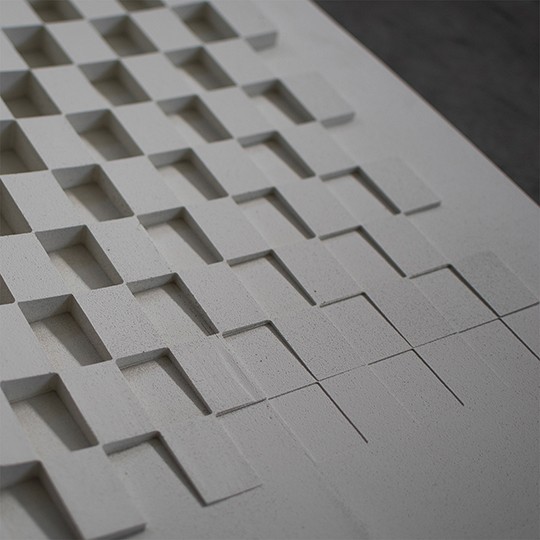
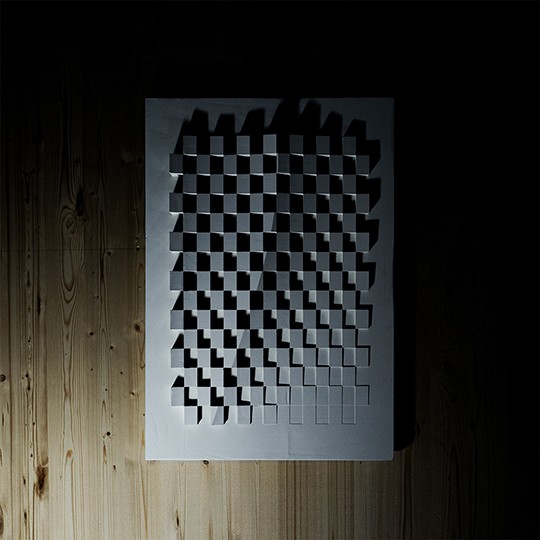
Exhibition in Nuno Centeno's Gallery
March / April 2023
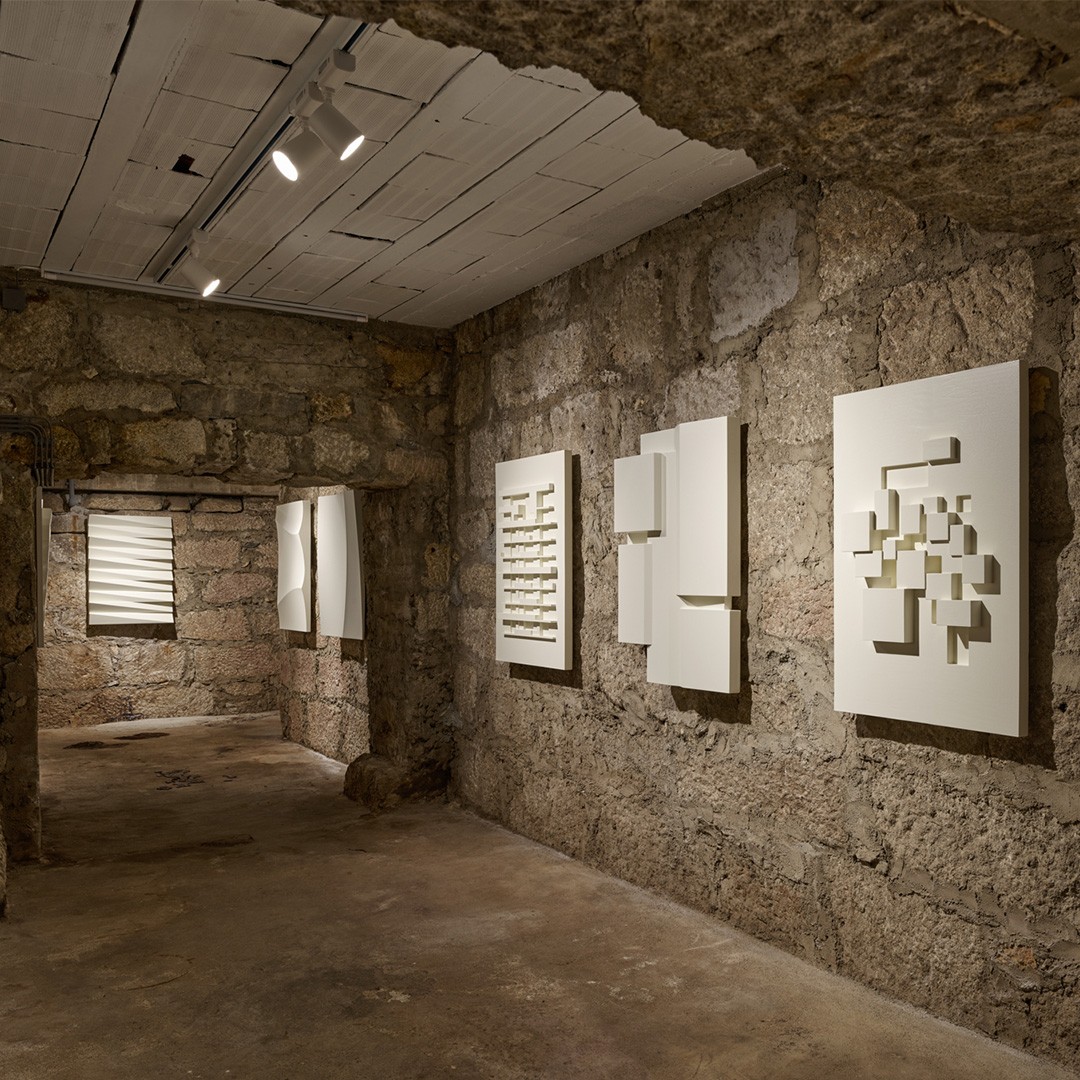
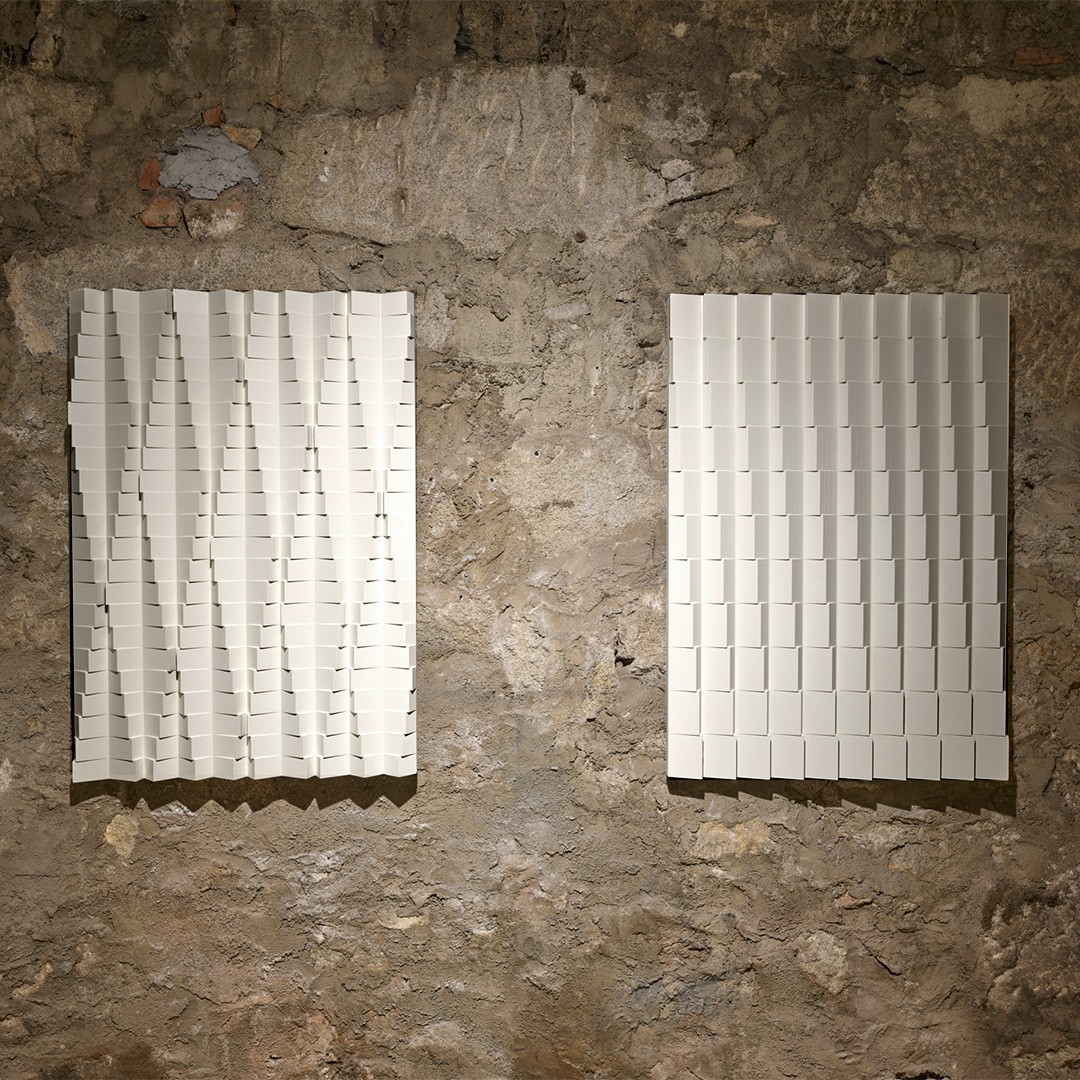
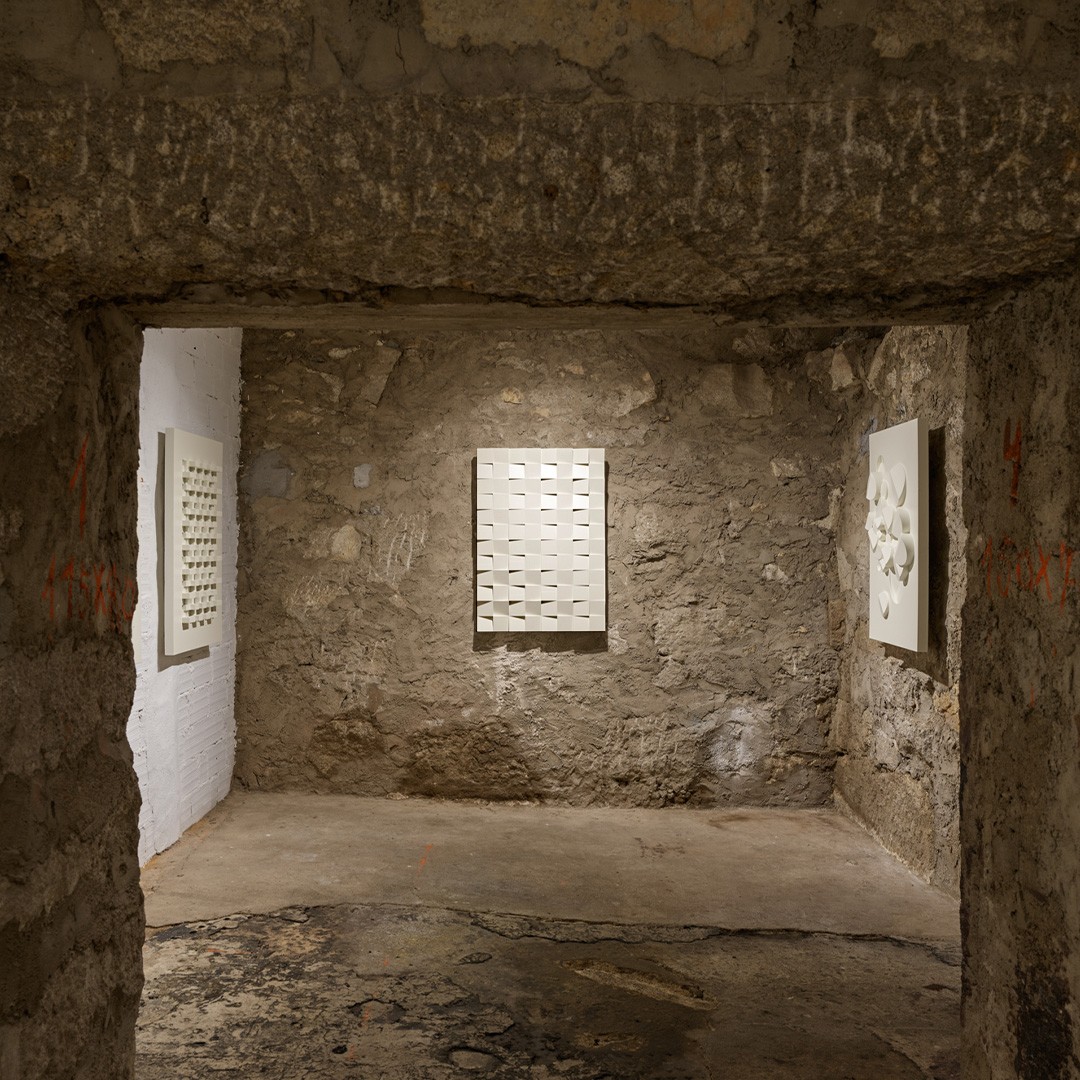
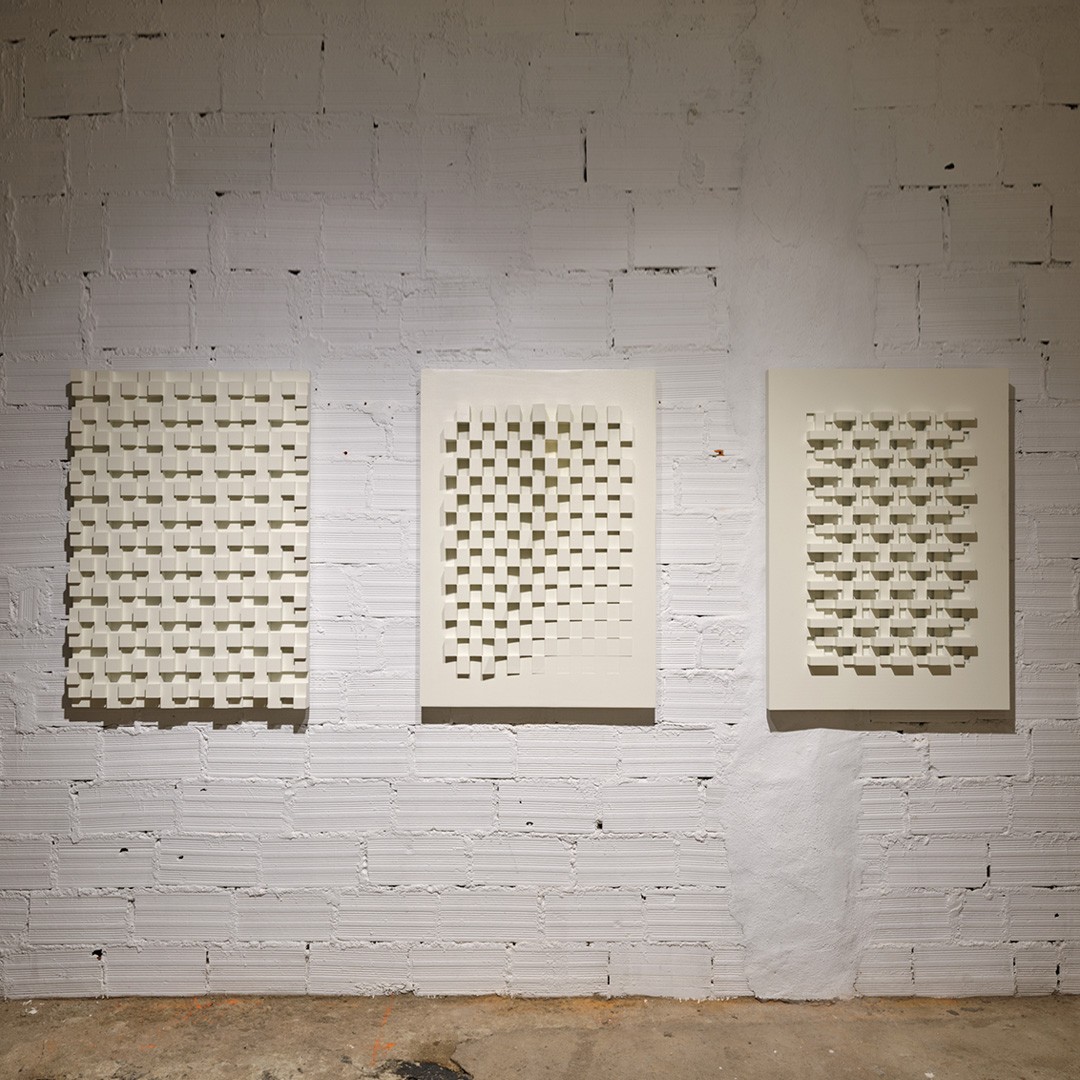
Proa do Porto
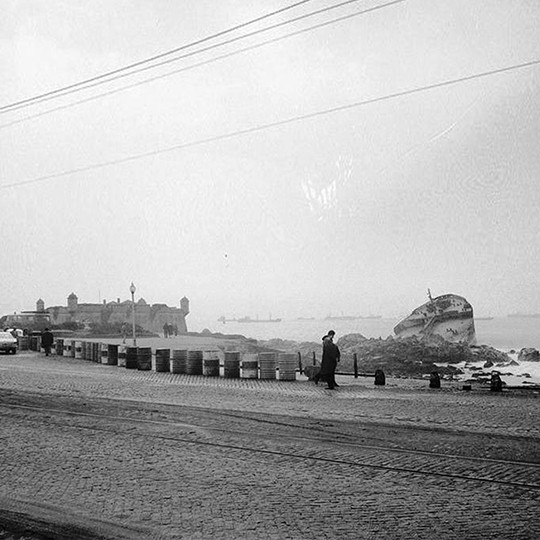
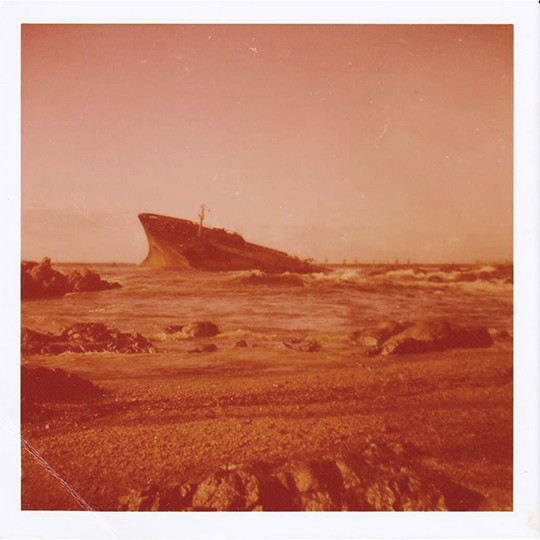
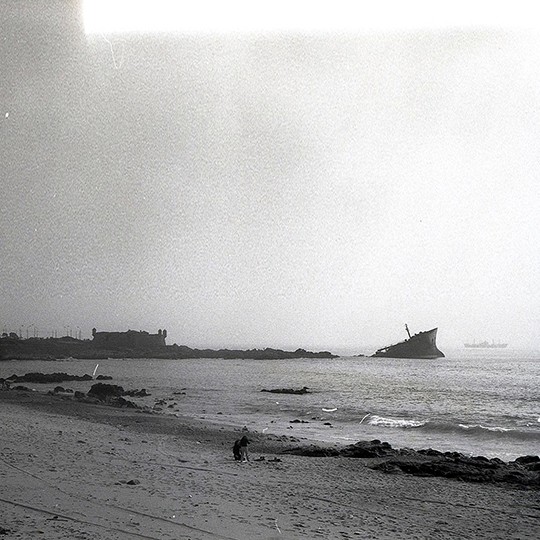
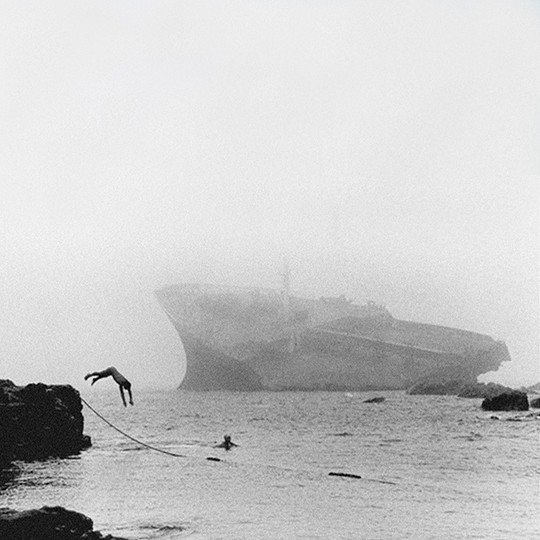
In 1975, the supertanker Jacob Maersk crashed against a rock off the coast of Porto. Seven lives were lost in the tragedy and 88,000 tonnes of crude oil spilled into our sea—one of the largest oil spills in living memory. However, on a day we lost so much, we also gained a lot.
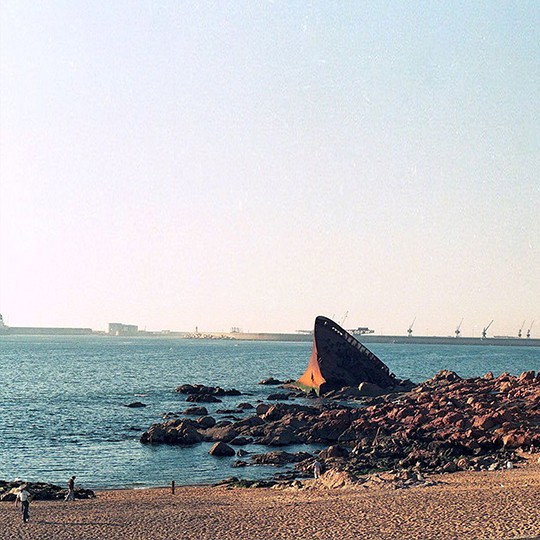
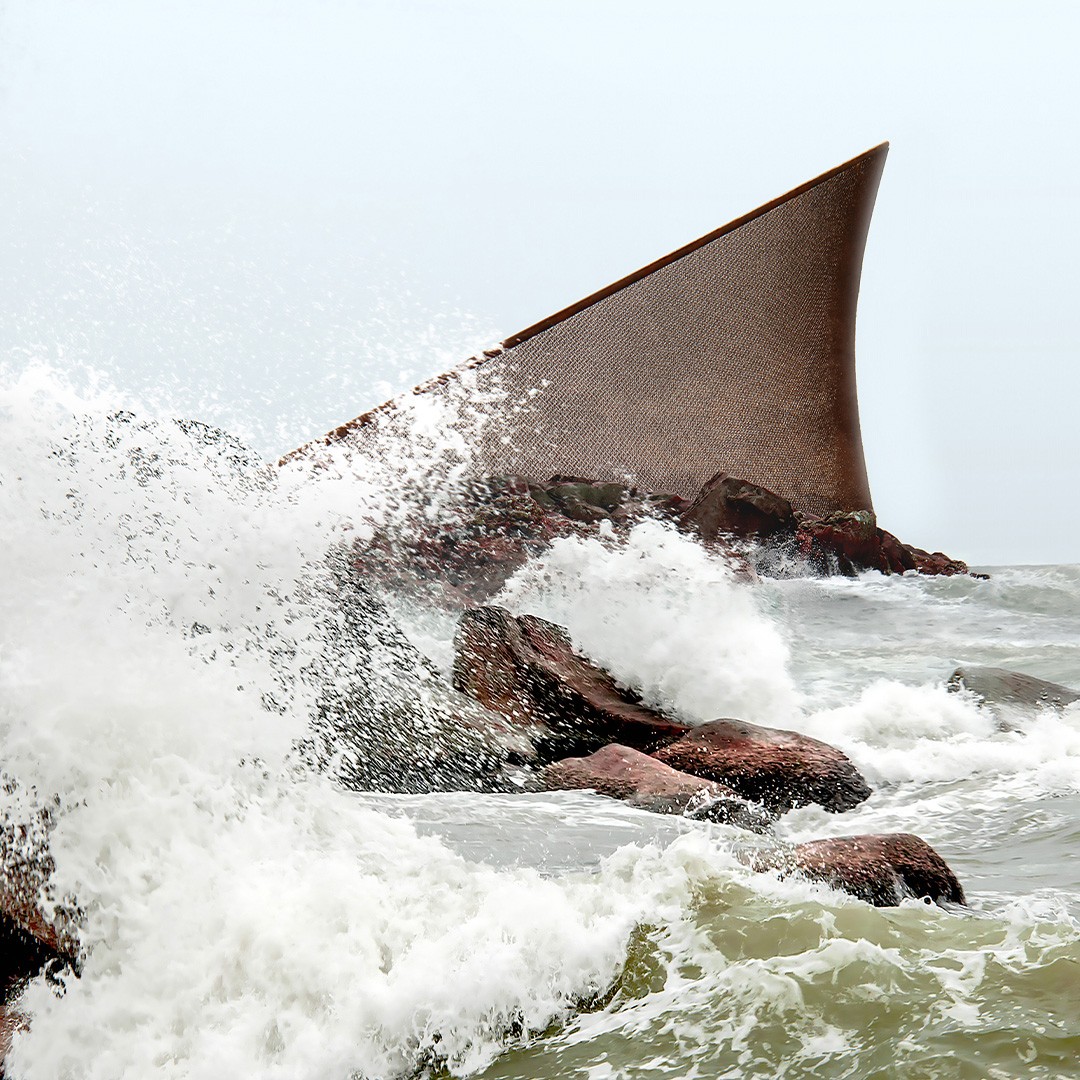
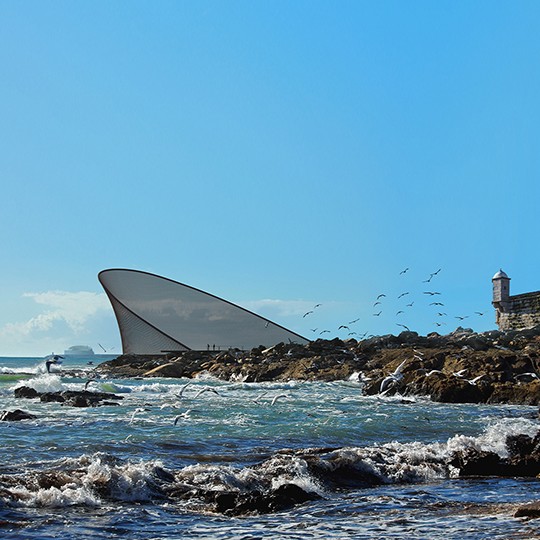
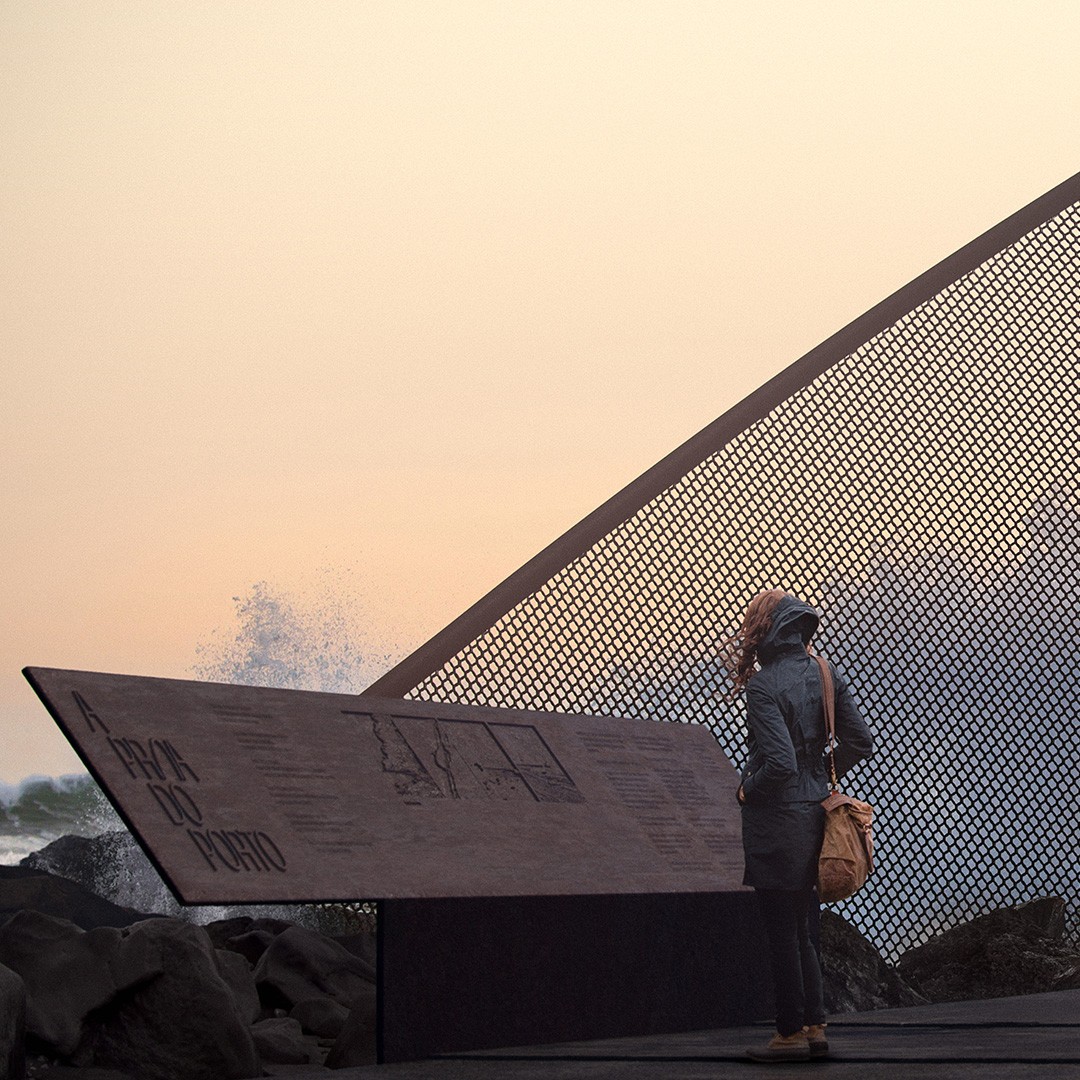
We gained a united people who came together in an extraordinary collective effort to confront the catastrophe, showing the world what the people of Porto were made of. And we gained a symbol that, for twenty years, honoured both the memory of those who were lost and the spirit of those who endured: the bow of the Jacob Maersk.
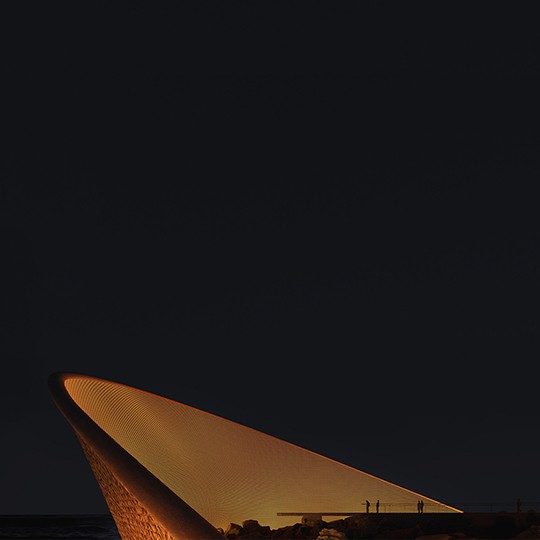
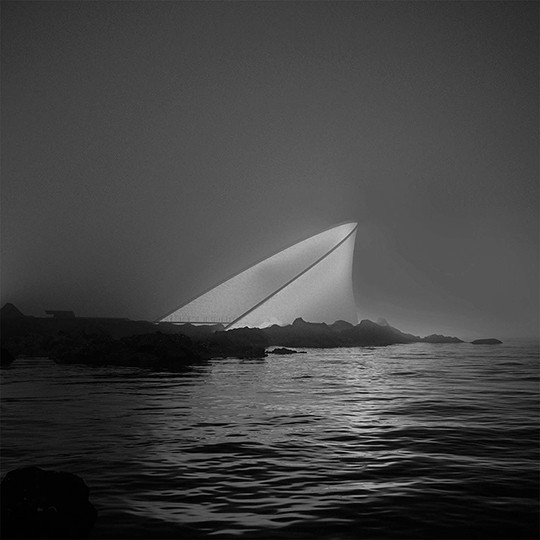
In 1995, for public health and environmental reasons, the bow was removed and, with it, the tribute itself. From the wreckage a memorial had been born, and from the memorial a landscape—one that carried the collective memory of a Porto that witnessed the tragedy and of the Porto that followed, which knew only its symbol.
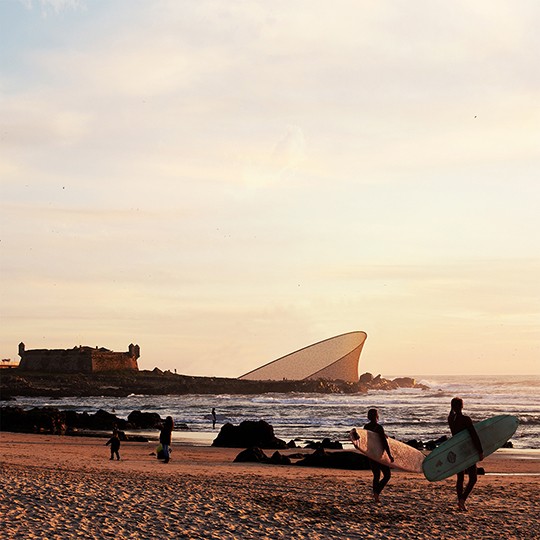
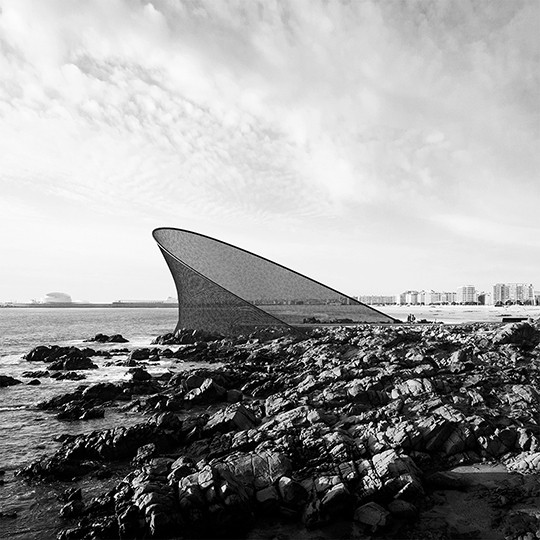
In 1995, the landscape was stripped of its memory, its homage, and its history.
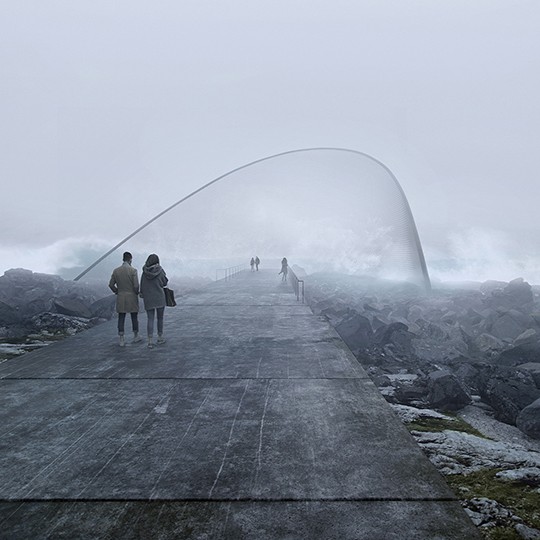
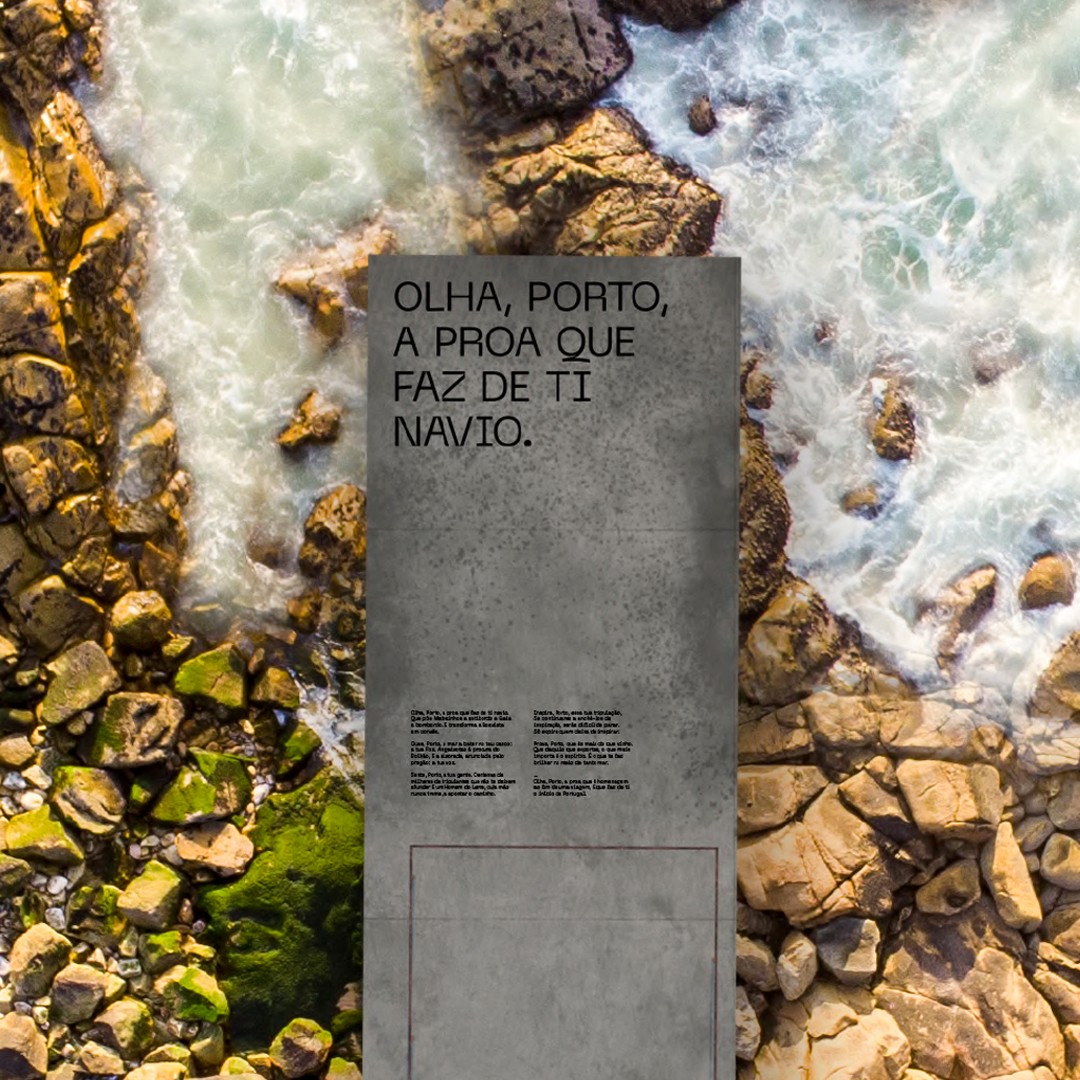
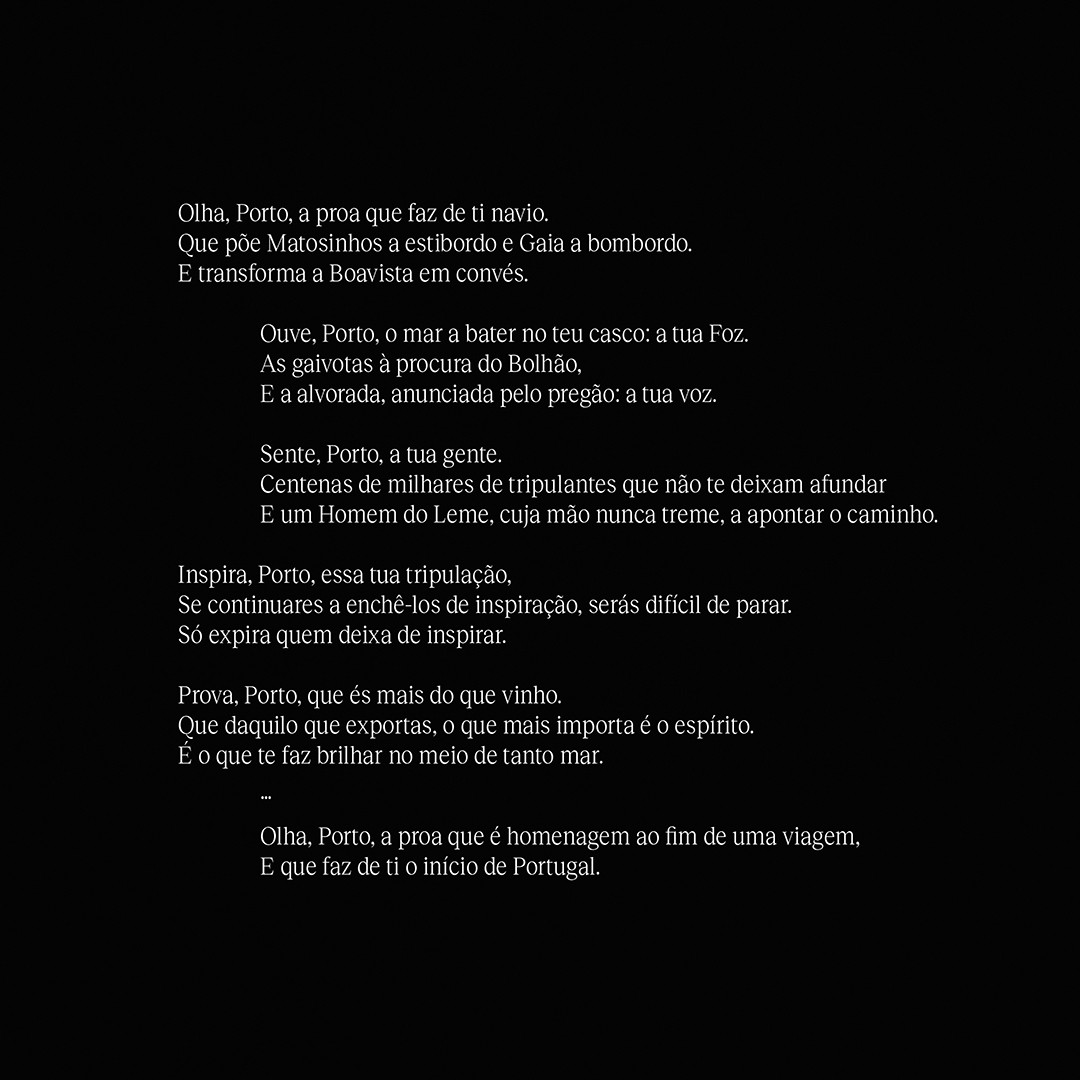
In 2023, we proposed giving the bow back to Porto.
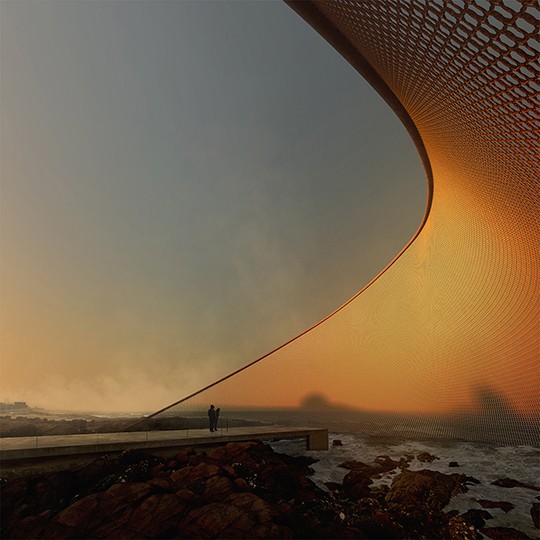
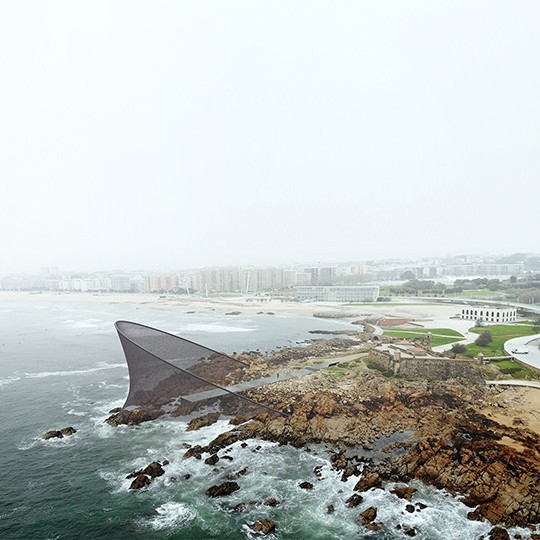
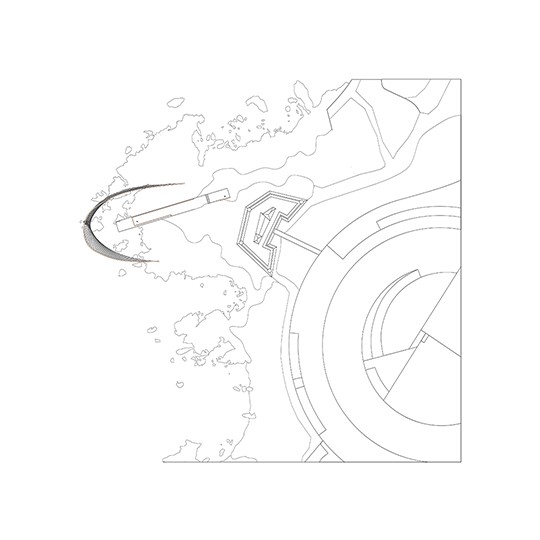
In memorium
Hans Bollerup
Sorensen
Carl Richard
Jensen Lars Torp
Geoffrey G. Watkins
Kurt Mogens
Hagstrom
Ejnar Poul Kristiansen
Poul Vestergaard
Proa do Porto
Diogo Brito (sculpture)
Miguel Durão (text)
Collaboration between the Minister of Fisheries, the Navy, the Army, the shipowner (The Shell Oil Company), and part of the local population prevented the pollution from reaching even more serious levels. Approximately 15,000 tons of crude oil reached the coast. The OECD estimated that the catastrophe cost $2.8 million at the time, which would be around €20 million today.
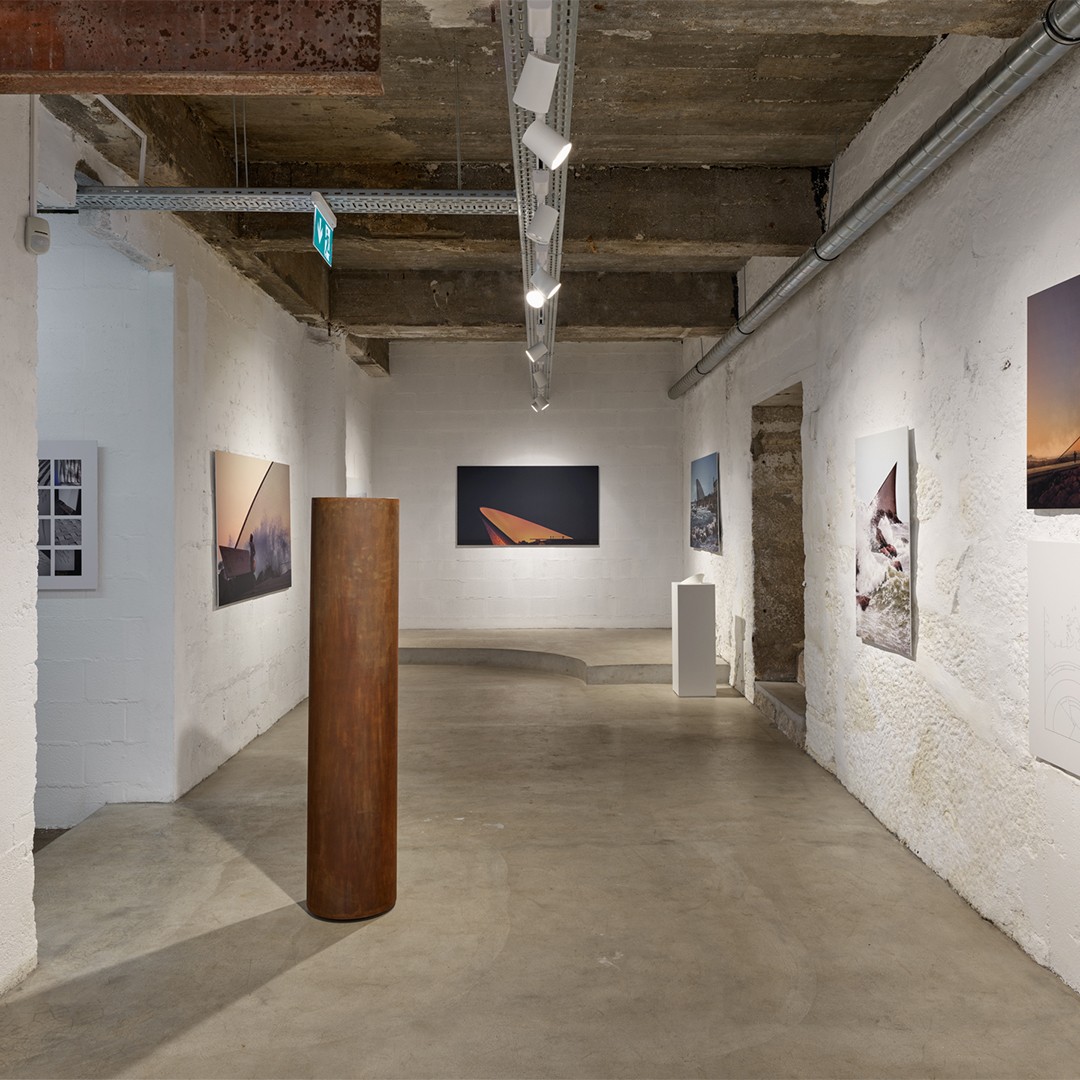
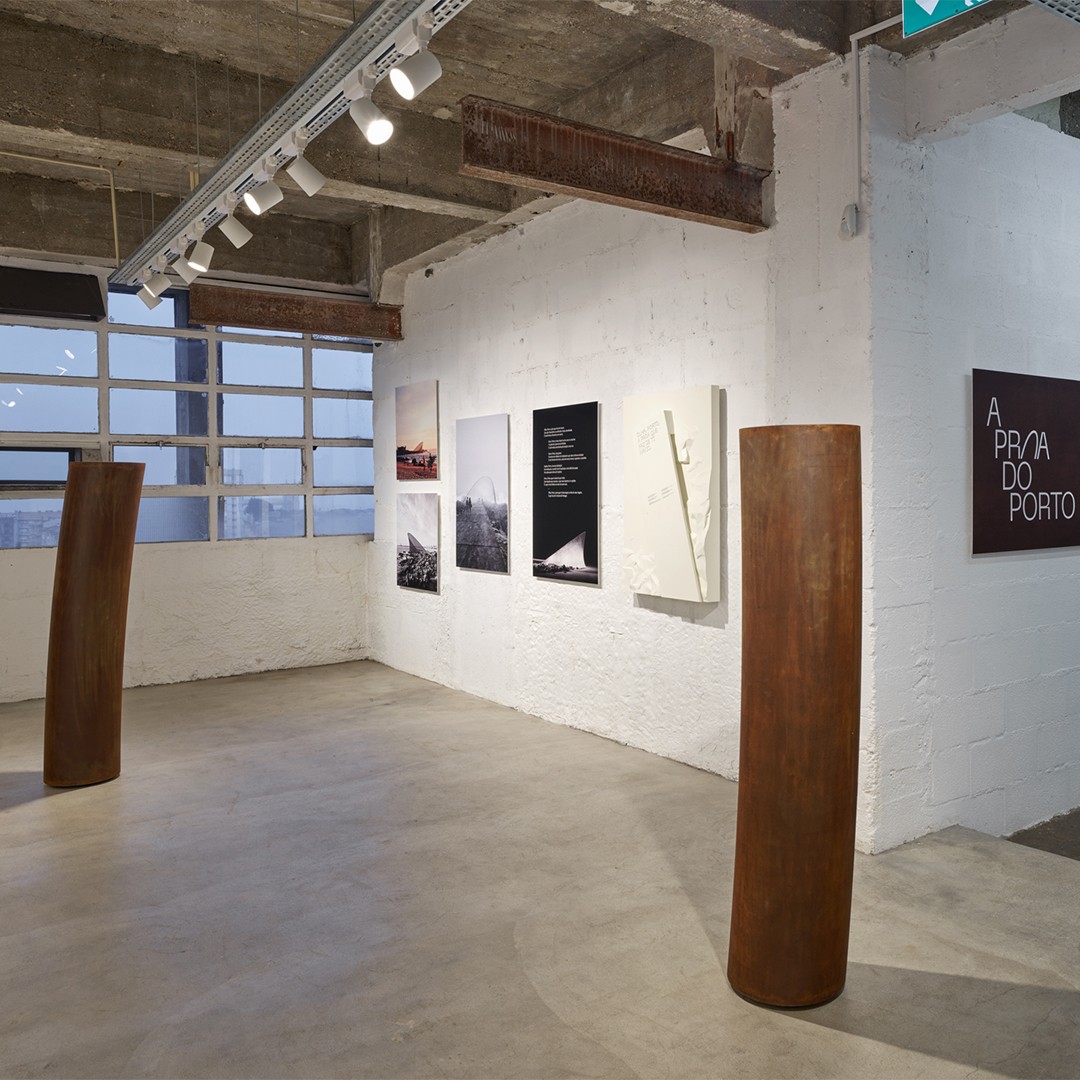
Exhibition in Nuno Centeno's Gallery
March / April 2023